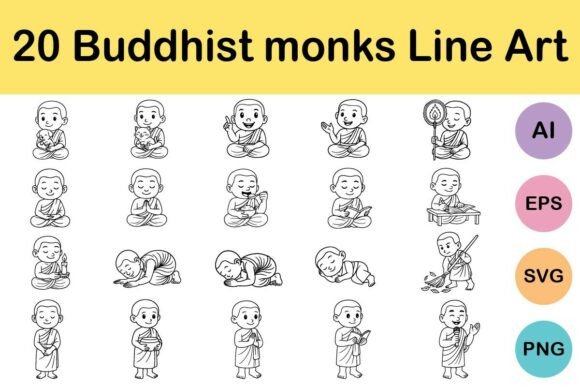
20 Buddhist Monks Line Art: A Designer’s Perspective
As an embroidery designer with years of experience working on a wide range of projects, I often find myself evaluating line art for its potential in real-world applications. The 20 Buddhist Monks Line Art is one such design that caught my attention for both its visual character and versatility. In this review, I’ll walk you through how it fits into the practical side of creating embroidered products—what works well, what needs caution, and where it shines.
First Impressions and Visual Personality
The first thing that stands out about the 20 Buddhist Monks Line Art is its spiritual and serene aesthetic. It carries a quiet elegance, which immediately makes me think of mindfulness-themed products or designs for boutique shops that focus on meaningful, cultural, or meditative content. The monks are depicted in simple silhouettes, with flowing robes and minimal facial features, giving the illustration a clean and timeless look.
This kind of line art is ideal for handmade product creators who want to add depth and storytelling without overwhelming the viewer. The layout suggests it could work as a group image, but each monk also appears distinct enough to be used individually. This opens up possibilities for layered embroidery projects or modular designs for items like tea towels or scrapbook pages.
What Kind of Project Fits Best?
- Tote Bag Design: The composition is large enough to make an impact on a tote bag but still maintains clarity when scaled down.
- Sweatshirt Embroidery: Especially in a minimalist color scheme, the line art can become a subtle yet powerful statement piece.
- Baby Embroidery: While not overtly cute, the gentle style might appeal to parents looking for unique, meaningful nursery decor or baby clothing accents.
- Embroidered Patch: The line art has a clear outline, making it a good candidate for applique-style patches on backpacks or jackets.
- Holiday Embroidery: With thoughtful thread choices, it could even serve as a calming holiday gift motif—especially during wellness-focused seasons.
Performance in Real-Life Embroidery Projects
When considering how the 20 Buddhist Monks Line Art will perform in actual stitching, a few key factors come into play. The simplicity of the lines means it’s likely built using running stitch or satin stitch techniques, which are common in line art-based machine embroidery designs. That said, the detail level varies across individual figures, with some monks having more intricate robe folds than others.
In a custom apparel setting, like a sweatshirt or t-shirt, the design benefits from high-quality fabric and precise stitching. On cotton blends or linen, the outlines hold up beautifully, especially if you use a contrasting thread color. For a tote bag, I’d recommend using medium-weight cotton with proper stabilizer underneath to prevent distortion during the hoop process.
For digital embroidery files, this line art translates well into vector form. If you’re planning to offer it as a downloadable asset on Etsy or your own site, it’s worth noting that users will appreciate its adaptability for both small and large formats. However, since the design is based on illustrations, it’s important to confirm whether it’s been optimized for embroidery machines or if additional editing is required for stitch flow and density.
Where It Works Well
- Custom Apparel: T-shirts, sweatshirts, and hoodies benefit from the bold shapes and clear outlines.
- Nursery Decor: When stitched onto muslin or felt, the line art can become part of a calming wall hanging or mobile.
- Digital Product Previews: Its line-based nature makes it perfect for mockups, printable cards, or blog headers related to mindfulness or spirituality.
- Handmade Products: Think embroidered aprons, pillow covers, or even kitchen towels. The imagery adds a touch of sophistication and purpose.
- Commercial Embroidery: As long as licensing allows, this design could easily become part of a curated collection for a small shop selling ethical or mindful lifestyle products.
Where to Use with Caution
- Small Hoop Sizes: The monks vary in size, and some may lose definition when scaled too small. Always test the smallest figure on scrap before finalizing.
- Textured Fabrics: Canvas or denim may cause stitch distortion unless you adjust tension and stabilizer accordingly.
- Thin or Stretchy Fabrics: These materials can warp under the weight of dense stitches, especially in areas with fine details.
- Dark Fabric Backgrounds: The line art relies heavily on contrast. You’ll need to choose thread colors carefully or consider adding a white backing stitch for visibility.
- Curved Surfaces: If you're using it on caps or curved surfaces, some monks might stretch or skew unless you account for fabric drape and movement.
- Frequent-Wash Items: Since this is a line-based design, avoid using delicate threads or overly tight stitch density if the finished product will endure repeated washing.
Customer Appeal and Branding Potential
From a business standpoint, the 20 Buddhist Monks Line Art is a versatile addition to any creative entrepreneur's portfolio. Whether you're an Etsy seller, a craft fair vendor, or managing a small shop product line, this design can help establish a niche in mindful or spiritual-themed merchandise.
Its visual simplicity gives it broad appeal. Customers drawn to minimalism, meditation, or Asian-inspired motifs will likely respond positively. It also enhances product value by suggesting thoughtfulness and intention behind the handmade presentation.
On darker fabrics, the line art might not stand out unless paired with a background fill or highlighted with metallic thread. Conversely, on light-colored materials, the stark contrast of black thread can create a dramatic effect. Consider offering printable mockups showing both options so buyers understand the final appearance better.
Professional Touches and Practical Notes
Here are a few professional tips to ensure the best results when using 20 Buddhist Monks Line Art in your next project:
- Test on Scrap Fabric: Before embroidering a customer item or selling the final product, always do a trial run. This helps catch issues with stitch direction or distortion early.
- Check Thread Color Contrast: Black thread works well, but other dark shades like navy or forest green may suit specific brand aesthetics. Test on different backgrounds.
- Review Stitch Density: If parts of the design have dense fills (like robe textures), they might pucker on certain fabrics. Adjust density settings accordingly.
- Confirm Hoop Size: Some monks are larger than others. Ensure your hoop can accommodate the full scale you plan to use without cropping or stretching.
- Inspect Small Details: Look closely at the hands, hems, and facial features. These tiny elements can either enhance or detract from the overall quality depending on how they're rendered.
- Use Proper Stabilizer: Especially on stretchy or thin materials, using a tear-away or cut-away stabilizer can make all the difference in stitch clarity.
- Test in Black and White Mockups: This helps determine how the design will appear in grayscale, useful for monochrome collections or limited-color palettes.
- Compare Light and Dark Backgrounds: The same design can feel entirely different depending on the fabric color. Offer variations if possible.
- Check Licensing: If you're planning to sell the finished product or distribute it as a digital embroidery file, confirm the licensing terms. Some graphics are for personal use only.
Final Thoughts for Makers and Sellers
The 20 Buddhist Monks Line Art is a strong contender for those looking to infuse their handmade or commercial projects with meaning and grace. It doesn’t shout; it whispers. That makes it perfect for clients who appreciate subtlety and for brands aiming for brand consistency in their offerings.
It’s not just another graphic—it’s a design with personality. But like any good illustration, it requires careful handling to maintain its integrity across various embroidery projects. Pay attention to fabric type, hoop size, and stitch behavior to keep the final product looking polished and professional.
If you're designing a personalized gift, like an embroidered cap or a holiday gift, this line art brings a sense of peace and purpose that customers will notice. And if you're building a collection of design assets for resale, it’s a great choice—as long as you’ve verified usage rights and tested it thoroughly.
In short, the 20 Buddhist Monks Line Art isn’t just about looks—it’s about intention. And in the world of embroidery design, that matters most.